Food Authenticity
Customized Authenticity Testing

Analytically Verifying the Origin and Authenticity of Food
Chemical and analytical solutions for verifying the origin, composition, and integrity of food products
Ensuring food authenticity is a key priority for the DIL (German Institute of Food Technology e. V.). Through our Food Authenticity service, we support companies, government agencies, and research partners in verifying the origin, composition, and authenticity of food—through custom-designed, project-based investigations grounded in sound chemical analysis, methodological excellence, and practical interpretation.
Global supply chains, complex formulations, and intense price pressure increase the risk of adulteration and mislabeling. At the same time, regulatory requirements—as well as the expectations of retailers and consumers regarding transparency and product safety—are on the rise. Traditional routine methods often reach their limits when addressing these issues. This is precisely where our Food Authenticity service division comes in, developing customized analytical strategies for sophisticated authenticity testing.

The Food Authenticity Service Division at DIL provides chemical and analytical testing when standard methods are insufficient, with a focus on NMR.
Want to learn more about our services?


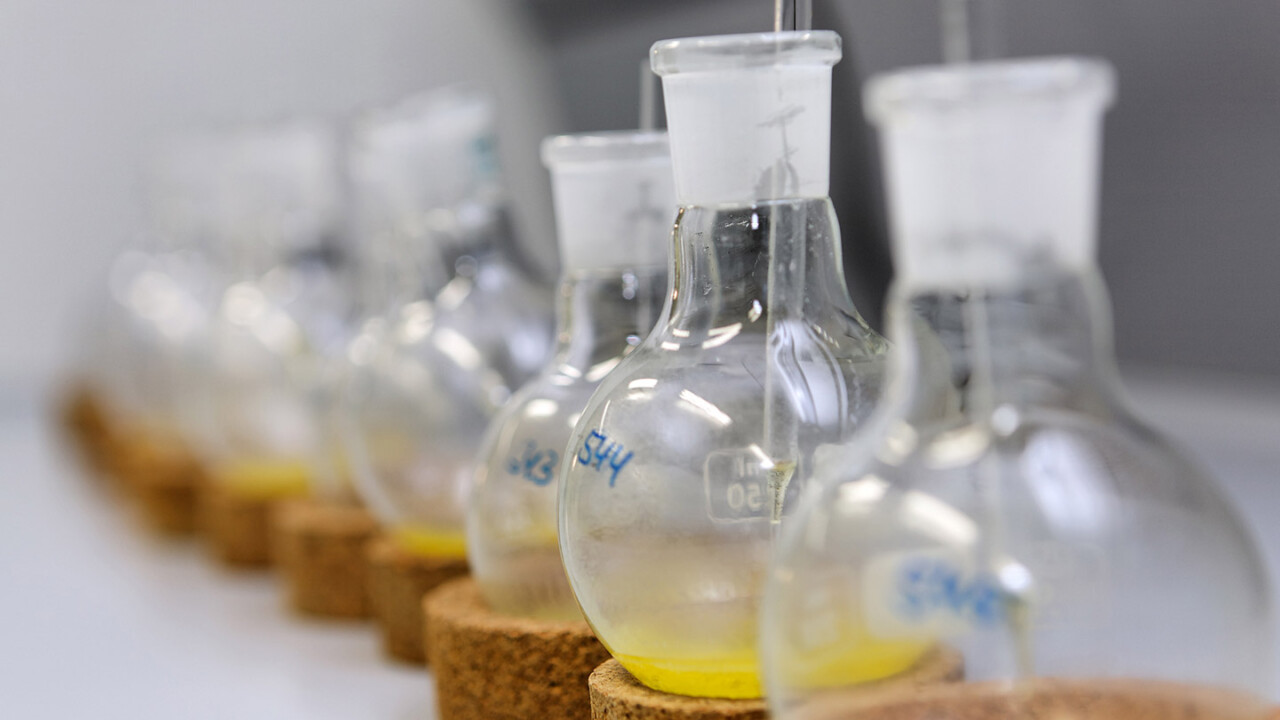
NMR fingerprints and complementary methods ensure traceability, quality, and authenticity, even for complex products
The focus is on chemical-analytical methods for identifying and evaluating characteristic ingredient profiles. Particular emphasis is placed on NMR spectroscopy, which enables the capture of comprehensive chemical fingerprints of food products and their comparison with reference data. This approach is complemented by other powerful methods such as HPLC-MS, IR, and Raman spectroscopy. By combining these techniques, it is possible to verify origin, identify adulteration, and ensure quality parameters—for example, in honey, fruit juices, wine, olive oil, meat, eggs, or complex processed products. A key added value of our work lies in the scientific interpretation of the analytical data. The results are not considered in isolation but are evaluated within the context of the product, the process, regulatory requirements, and market conditions. This provides a solid basis for decision-making regarding quality assurance, risk assessment, and strategic issues.
Each project is planned individually—from sample preparation and the selection of appropriate analytical methods to a thorough evaluation of the results. Precision, traceability, and practical relevance are our top priorities. This service area is expressly not designed as a routine laboratory for individual analyses, but rather specializes in complex, project-based issues. With its Food Authenticity Service Division, the DIL offers a specialized point of contact for chemical-analytical authenticity testing—in cases where standard analytical methods are insufficient and in-depth chemical characterization, particularly using NMR, provides decisive added value.
Our Service Description
- Development of Customized Analytical Strategies for Sophisticated Authenticity Tests
- Focus on the collection and evaluation of characteristic ingredient profiles
- NMR Spectroscopy for Comprehensive Chemical Fingerprints and Reference Comparison
- Supplementary methods: HPLC-MS, IR and Raman spectroscopy
- Combination of Methods for Traceability, Counterfeit Detection, and Quality Assurance
- Examples: honey, fruit juices, wine, olive oil, meat, eggs
- Also suitable for products that have undergone complex processing
- Contextualizing the data in terms of product, process, regulation, and market
- Basis for Decision-Making Regarding Quality Assurance, Risk Assessment, and Strategic Issues
- Customized planning, from sample preparation to result evaluation
- Priority: Precision, Traceability, and Practical Relevance
- Specializes in complex, project-based issues (not a routine laboratory for individual analyses)