Projektstatus
Projektlaufzeit
Ansprechpartner
Laufend
During the curing of raw ham, water activity is reduced, allowing substances with low solubility to precipitate as individual crystals within the muscle tissue (ARNAU et al. 1994) or as a surface coating (ARNAU et al. 1996). Peptides and amino acids may be released due to enzymes inherent in the meat (SÁRRAGA et al. 1993), since the crystals may consist, among other things, of the amino acids tyrosine and phenylalanine (ARNAU et al. 1987).
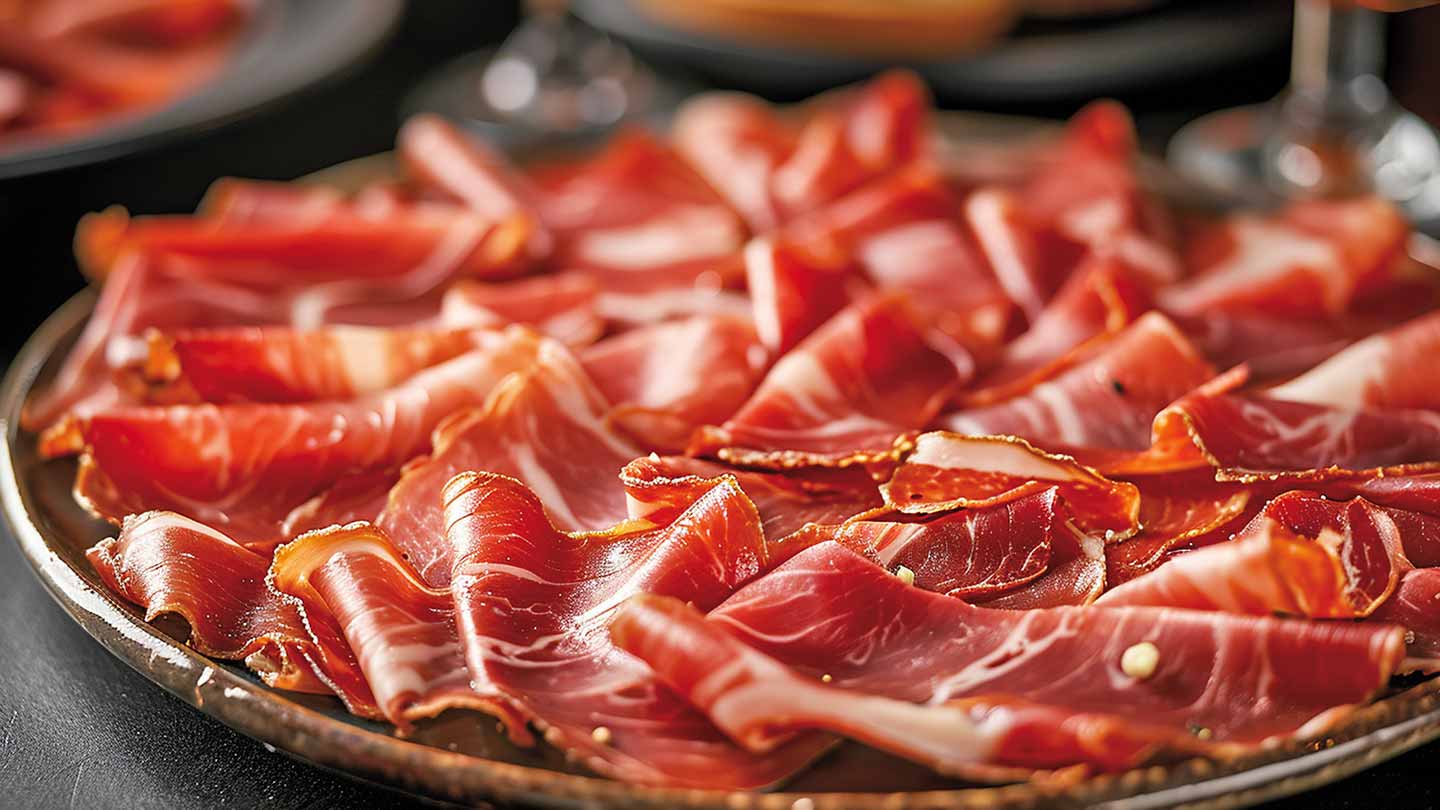
The project investigates the formation of white surface coatings and intramuscular crystals in long-aged raw ham, which can be promoted by the cold storage required in global production chains. The goal is to clarify why precipitates form preferentially on the surface or within the matrix, when and where specific crystals form, and which components are involved. Since tyrosine is nonpolar and poorly soluble in water, these deposits are difficult to wash off—therefore, prevention strategies are needed. The hypothesis is that location, the kinetics of nucleation, and crystal growth are determined by mass transport of proteolytic degradation products as well as ion gradients during drying, ripening, and storage; raw materials and the process interact. The study examines influencing factors in model systems, approaches to reducing free ions, and combinations of appropriate raw material selection, gentle processing, and complexing agents. The goal is to understand the effects of cut, pH, curing time, and salt content on film and crystal formation.


DIL German Institute of Food Technologies
Prof.-von-Klitzing-Str. 7
49610 Quakenbrück
+49 (0) 54 31 183 - 0
info@dil-ev.de
An Overview of Our Services
Consulting
Contract Manufacturing
Our Research at a Glance
Safety / Authenticity
Sustainability
Partnerships