Projektstatus
Projektlaufzeit
Ansprechpartner
Abgeschlossen
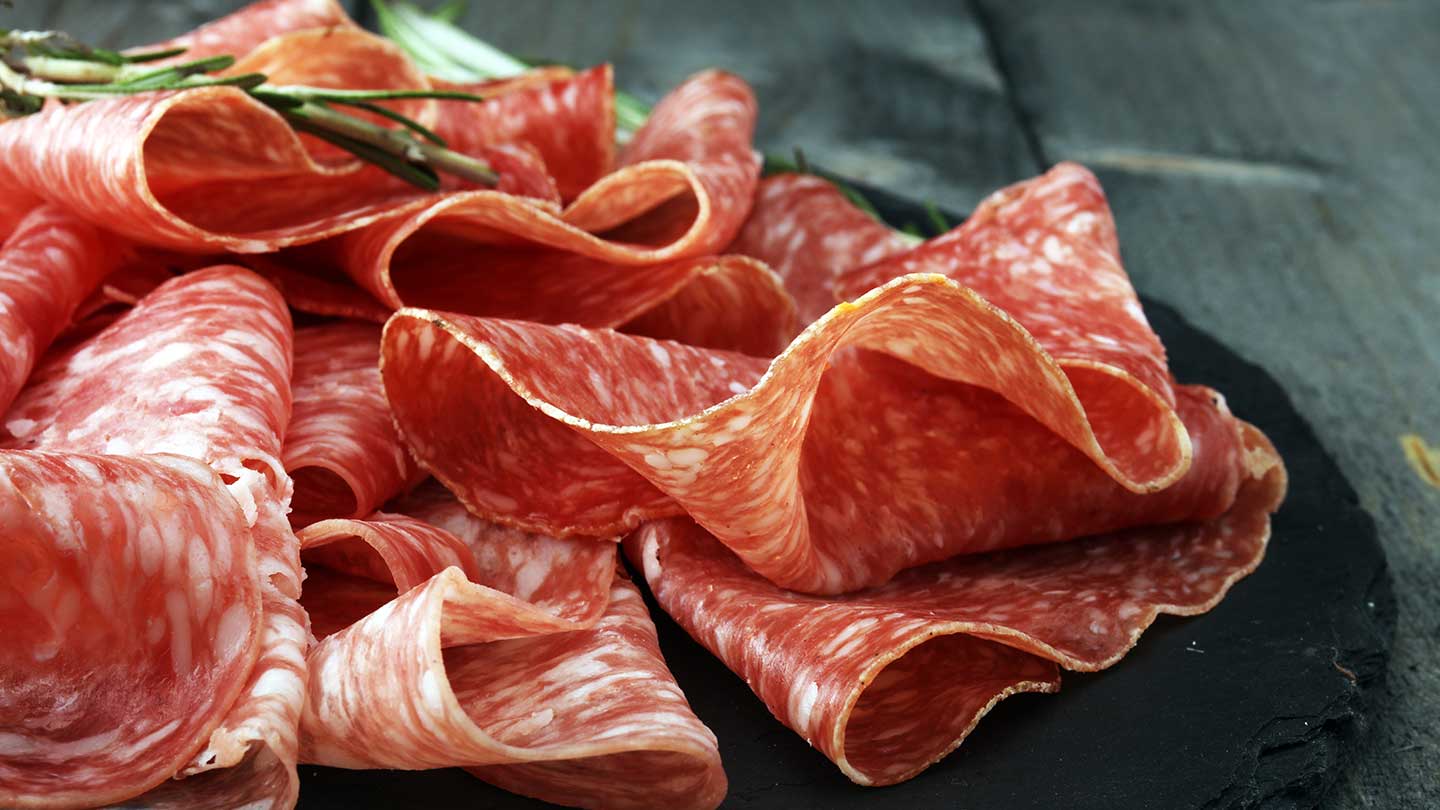
In industrial practice, starter cultures are used in the production of fermented raw sausages to control the fermentation process—in terms of product safety and sensory characteristics—by suppressing the indigenous microbiota. The role of cell-wall-lytic enzymes in the ability of *Latilactobacillus sakei* and *Latilactobacillus curvatus* to establish themselves during raw sausage ripening was investigated during the course of the project.
Cell-wall-lytic enzymes are either bacterial peptidoglycan hydrolases or originate from integrated prophages that can be activated by induction. The project investigated which factors during starter culture preparation or raw sausage maturation trigger the formation of such lytic enzymes and how their presence—or resistance to them—influences the competitiveness of L. sakei and L. curvatus. Lytic enzymes can lyse starter cultures and existing meat bacteria, which could reduce off-fermentations and enhance product safety. In addition, lysis releases intracellular enzymes that accelerate the breakdown of meat components. This can improve the nutrient supply for active starter cultures and have a positive effect on flavor development during aging.


DIL German Institute of Food Technologies
Prof.-von-Klitzing-Str. 7
49610 Quakenbrück
+49 (0) 54 31 183 - 0
info@dil-ev.de
An Overview of Our Services
Consulting
Contract Manufacturing
Our Research at a Glance
Safety / Authenticity
Sustainability
Partnerships