Projektstatus
Projektlaufzeit
Ansprechpartner
Laufend
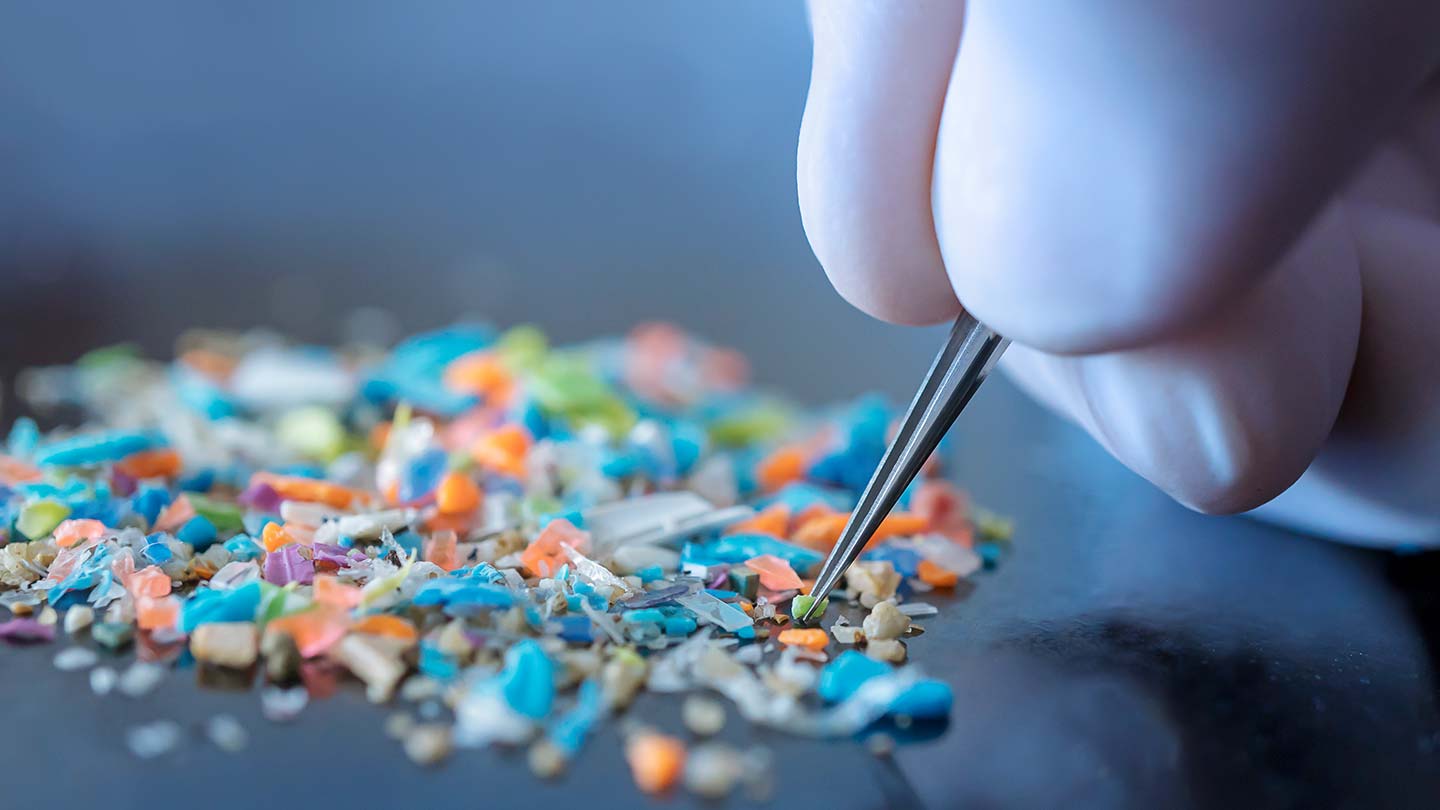
Despite EU regulations, large amounts of plastic enter wastewater treatment plants via wastewater. It is unclear how effectively existing treatment processes remove microplastics, as studies often detect only larger particles and may overlook particularly relevant particles smaller than 5 µm. Therefore, analytical strategies are being developed for treated wastewater and drinking water to reliably detect particles smaller than 5 µm—as a basis for risk assessments and process optimization.
As part of the project, the DIL developed detection methods for microplastics in drinking water and wastewater that are used for sampling in the fourth stage of wastewater treatment. TED-GC/MS methods were established and validated for the most common types of polymers, with detection limits down to the single-digit microgram range. In combination with µRaman spectroscopy, specially manufactured metal filters can be loaded with (waste)water samples and analyzed. Currently, the effectiveness of removing the smallest microplastic particles (250–5 µm) is being investigated when treated wastewater is treated with activated carbon and subsequently filtered through cloth. For this purpose, a mobile filter cascade was constructed that can sample several hundred liters of clarified effluent and retain particles for laboratory analysis. At the same time, samples for nanoplastics (<5 µm) are collected, chemically prepared, enriched, and separated by field-flow fractionation for subsequent detection, if necessary, using TED-GC/MS and µRaman.



DIL German Institute of Food Technologies
Prof.-von-Klitzing-Str. 7
49610 Quakenbrück
+49 (0) 54 31 183 - 0
info@dil-ev.de
An Overview of Our Services
Consulting
Contract Manufacturing
Our Research at a Glance
Safety / Authenticity
Sustainability
Partnerships