Projektstatus
Projektlaufzeit
Ansprechpartner
Laufend
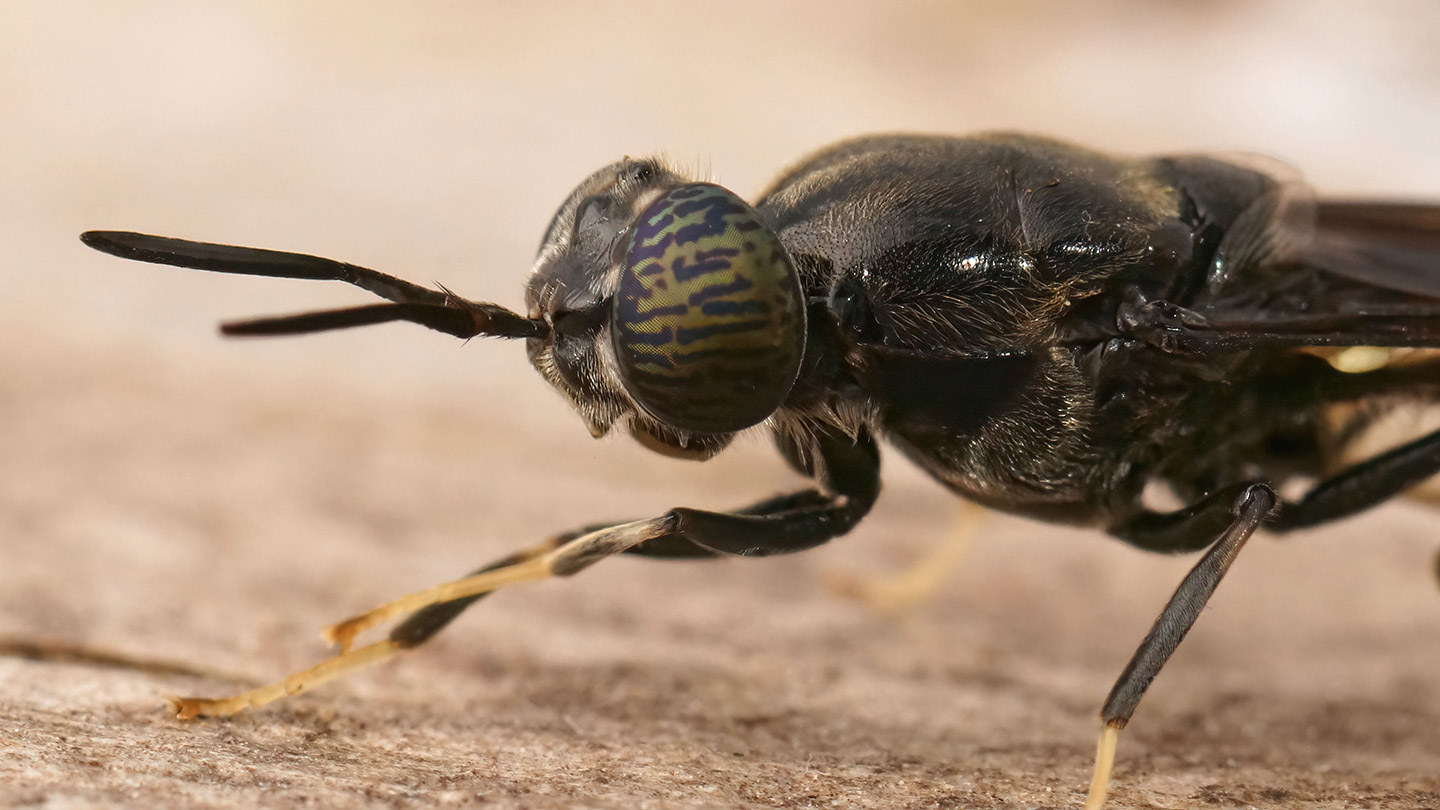
Insects, such as the larvae of the black soldier fly, represent a sustainable source of protein with high potential. However, based on the current state of the art, only the rearing of the larvae is carried out on a decentralized basis. A comprehensive approach to the decentralized production of insect protein would also include decentralized fly and egg production, for example, on a farm. This is the focus of the ReproFly project.
The current process for breeding black soldier fly larvae is centralized and, under the current procedure, cannot be converted into a decentralized process on farms. This poses particular limitations for smaller operators in rearing operations, as it creates a dependency on the supplier of young larvae, and long delivery routes sometimes result in high mortality rates among the young larvae. A system characterized by high mortality rates among young larvae is incompatible with sustainable production. At the same time, this is accompanied by a fluctuating supply of live young larvae, which makes scalable biomass production either impossible to define or significantly more difficult. To make rearing more effective, the entire life cycle of the black soldier fly (pupated larvae—fly—egg laying—hatching of the small larvae—rearing of the larvae) would need to take place at the agricultural production facility. To this end, the project aims to implement a highly automated reproduction unit (pupated larva – fly – egg laying) that enables continuous and consistent egg laying directly at the rearing facility. This includes the automated feeding of hatched flies into a reproduction cage, the removal of dead flies, and the continuous monitoring and control of the fly population. This minimizes external intervention by the operator and maximizes egg output. As part of the project, a fully functional prototype of the breeding cage—featuring intelligent system control and innovative automation technologies—will be developed, assembled, and tested in a larval fattening farm setting. This will enable breeders to independently and scalably manage the reproduction of young larvae.



DIL German Institute of Food Technologies
Prof.-von-Klitzing-Str. 7
49610 Quakenbrück
+49 (0) 54 31 183 - 0
info@dil-ev.de
An Overview of Our Services
Consulting
Contract Manufacturing
Our Research at a Glance
Safety / Authenticity
Sustainability
Partnerships